
You ask three vendors for an AI photo booth and get three different products back. One quotes a standard booth with a filter turned on. One quotes a tablet that generates a painted portrait from a single headshot. One offers software that swaps the wall behind your guests. The phrase does not describe one machine, and the versions fail in different ways once the room is full and the lights are down.
The four things vendors mean
Before you compare quotes, make the vendor tell you which of these you are actually buying.
- AI backgrounds. Software finds the edge of each guest and replaces everything behind them. No green fabric required, which is the whole selling point.:
- Skin smoothing and glam filters. Automatic retouching applied to every frame, sometimes adjustable, often not.:
- AI generated portraits. A guest sits for one photo and a model returns a stylized version: an oil painting, an eighties yearbook shot, a movie poster. The output is a rendering based on your event, not a picture of it.
- AI as a label. Same camera, same strobe, same prints, new word on the quote. Ask exactly which step of the process changed.:
What survives a real room
Background replacement is only as good as its edge detection, and edges are where receptions get hard. Curly hair, a veil, a black tuxedo against a dim wall, a guest waving a sign halfway out of frame. Cutouts that look clean in a demo under even light go ragged when the only light in the room is a purple uplight. If a vendor sells background swaps, ask to see samples shot at night at a venue, not studio tests.
Generated portraits have a second problem: time. A print booth turns a group around in roughly 30 seconds. Add 40 seconds of rendering per person plus a couple of retakes and the math changes fast. At a 150 guest wedding with the booth open three hours, you have about 180 minutes of line. Losing a third of that to processing means plenty of guests never reach the front.
Most of these features also need a live internet connection. Barns, tented receptions, hotel basements and country clubs are exactly the places where that connection is weakest. Ask what the booth does when the signal drops, and whether guests still leave with something.
Privacy questions to ask before you sign
Anything that analyzes faces raises questions a host should ask on the record, in email, before the deposit goes out.
- Where are guest photos processed, on the device in the room or on someone else's server?:
- Are guest images used to train or improve any model? Get a written no if you want one.:
- How long are images kept after the event, and who can request deletion?:
- Is there consent signage at the booth, and can a guest decline the AI step and still get a normal photo?:
- Does the vendor account for state biometric privacy laws? Illinois, Texas and Washington have specific rules, and an Illinois venue is not a place to guess.:
- Who owns the final images, and can the vendor post them publicly without asking?:
What we run, and what we do not
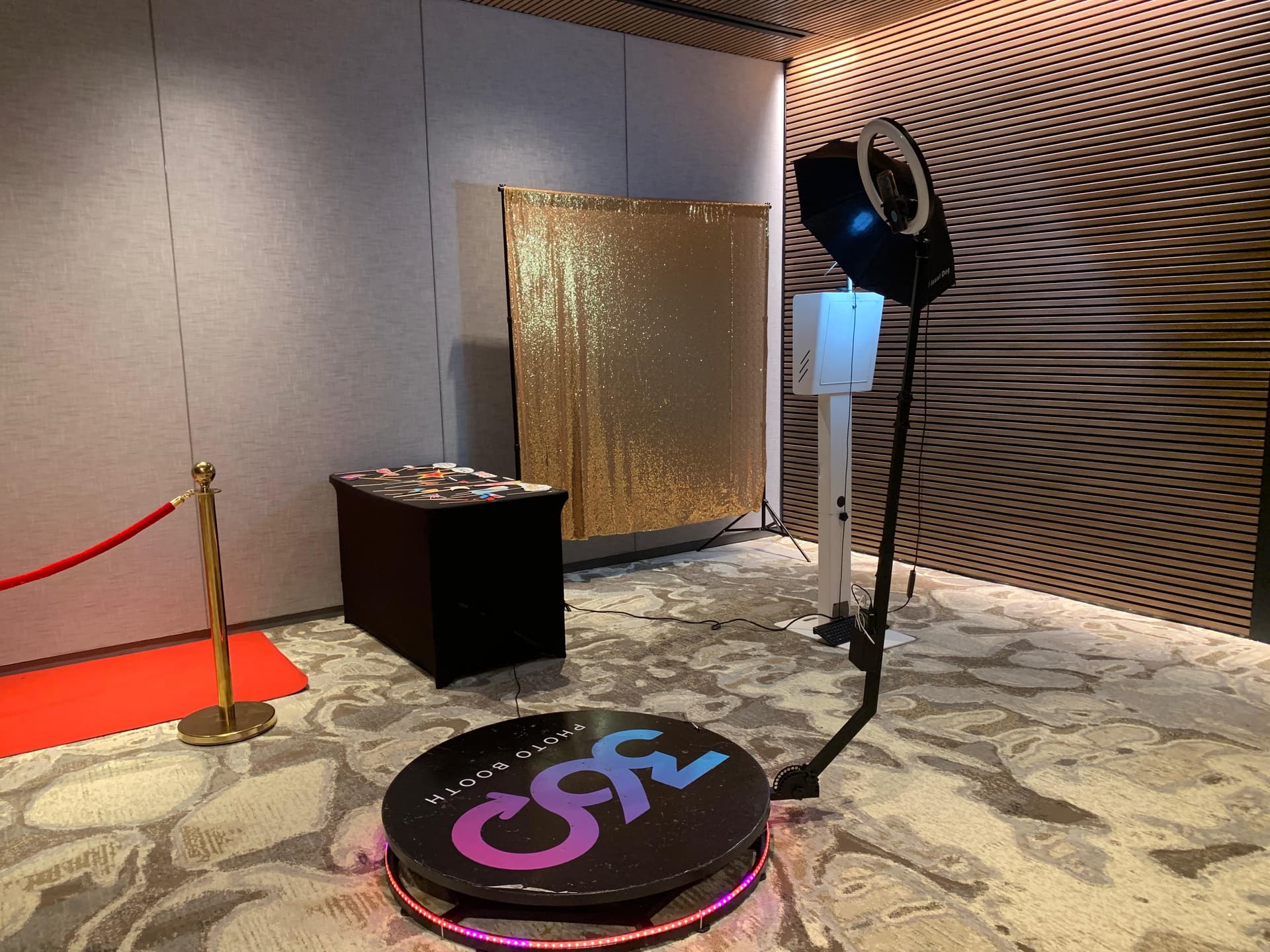
Peek-A-Booth rents four setups: an open air booth with a DSLR and studio strobe printing 2x6 strips on site, a digital booth that shares by QR or text with GIFs and boomerangs, a 360 video booth, and the Vogue Magazine Box. Personalized templates and overlays are design work done before your event, not a model guessing at your guests. We do not do green screen, we do not run a mirror booth, and we do not run a high speed camera arm.
That is worth saying plainly. Green screen and AI background swaps solve the same problem, and if changing the backdrop is the point of your booth, we are not your vendor for it.
Decide by the room first
Whatever software sits on top, the physical setup decides how the pictures look. The open air booth needs about 8 by 8 feet. A 360 booth needs about 12 by 10 feet of clear floor, because guests stand still while an arm swings around them. The Vogue box needs roughly 10 by 10 with 9 feet of ceiling clearance, which rules out a fair number of basements and tents. Get those numbers from your venue coordinator along with the location of the nearest dedicated outlet, then argue about filters. A booth in the right corner with good light beats a clever effect in a bad one.